
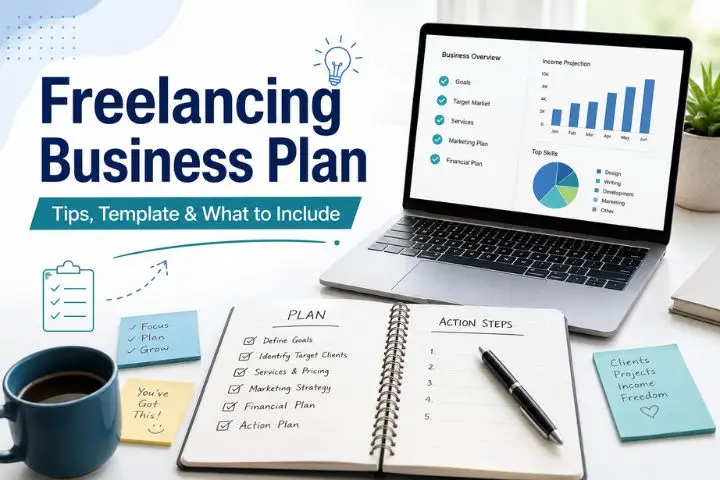
Freelancing business plan may sound like something only big companies need, but it can be just as useful for beginners who want to start freelancing with a clear direction. Many new freelancers create profiles, apply for jobs, or choose random services without first thinking about what they offer, who they want to help, how much they should charge, or how they will find clients.
From experience, one of the biggest mistakes beginners make is starting without a simple plan. They may have skills, motivation, and time, but without direction, freelancing can quickly become confusing. A simple plan helps a beginner focus on one service, understand the right client, set basic pricing, and create a realistic action path.
This guide explains how to create a practical plan without making it complicated. It covers useful tips, a beginner-friendly template, what to include, common mistakes to avoid, and a simple example for new freelancers. This freelancing tips business plan guide is written for beginners who want a clear, simple, and practical starting point before they begin looking for paid freelance work.
What Is a Freelancing Business Plan?

A freelancing business plan is a simple document that explains how a freelancer will start, manage, and grow their freelance work. It does not have to be a long or complicated corporate-style business plan. For beginners, it can be a one-page roadmap that clearly shows what service they offer, who they want to help, how they will price their work, and how they plan to find clients.
Many new freelancers think planning means writing a professional business report with pages of market research and financial charts. In reality, a beginner does not need a 30-page document. They need a clear and practical plan they can actually follow. This plan should answer basic questions such as: What skill will be offered? Who is the ideal client? What problem will be solved? What price will be charged? Where will clients come from?
From my experience, a short plan that is used consistently is much better than a perfect plan that stays ignored. Freelancing becomes easier when a person knows their service, target market, pricing, and next action steps before they start applying for work.
Why Beginners Need a Plan Before Starting Freelancing
Many beginners enter freelancing with excitement, but without a clear plan. This often creates confusion because they do not know which skill to focus on, who their ideal client is, or how much they should charge.
A simple plan helps beginners avoid these common problems:
- Choosing too many services:
New freelancers often offer writing, design, data entry, social media management, and virtual assistance all at once. This can make their profile look unclear instead of professional. - Not knowing the ideal client:
Without a target client, beginners apply to random jobs and waste time on work that may not match their skills. - Underpricing their work:
Many beginners charge very low rates because they fear losing clients. This can make their work feel less valuable and harder to continue long term. - Depending only on freelance platforms:
Platforms like Fiverr and Upwork can help, but relying only on them limits opportunities. A freelancer should also think about LinkedIn, referrals, Facebook groups, and direct outreach. - Not building a portfolio:
Clients usually want proof of skill. Even 2–3 sample projects can help a beginner look more serious and trustworthy. - Applying randomly without strategy:
Sending proposals without a clear service, offer, or client type usually leads to poor results.
A plan helps because it:
- Creates focus
- Saves time
- Improves confidence
- Makes pricing easier
- Gives a clear marketing direction
- Helps the freelancer track progress
The main purpose of these freelancing tips business plan ideas is to help beginners avoid confusion before they start offering services. From my practical experience, beginners who write down their service, target client, and weekly action plan usually make better decisions than those who work without any strategy.
What to Include in a Freelancing Plan
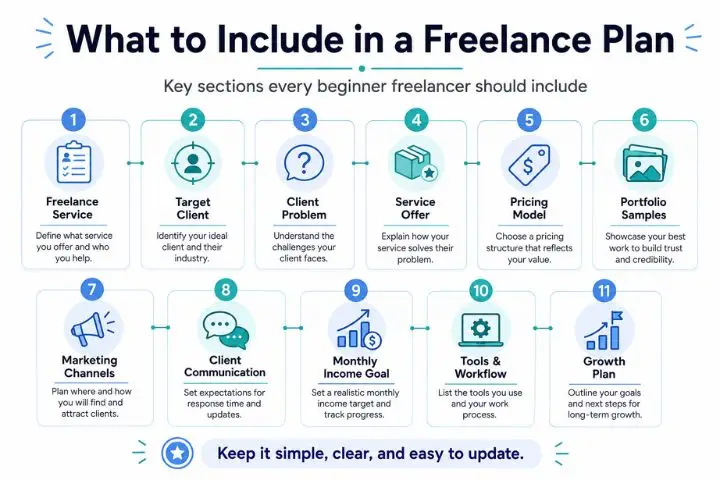
A good freelancing business plan should show what the freelancer offers, who they want to serve, and how they plan to earn money. It does not need to be long or complicated. For beginners, the goal is to create a simple plan that gives direction and makes daily action easier.
Each part of the plan should be short, clear, and realistic. Beginners should avoid overcomplicating it with too many services, advanced financial projections, or confusing business language. A simple table can make the plan easier to understand and update.
| Section | What to Write | Simple Example |
| Freelance service | Write the main service you want to offer. | Blog writing, graphic design, video editing, or virtual assistance |
| Target client | Define the type of client you want to work with. | Small business owners, bloggers, coaches, or online stores |
| Client problem | Explain the problem your service solves. | The client needs website content but has no time to write it |
| Service offer | Turn your skill into a clear offer. | “I will write SEO-friendly blog posts for small business websites” |
| Pricing model | Decide how you will charge clients. | Per project, per hour, per article, or monthly package |
| Portfolio samples | Plan what proof of work you will show. | 3 sample blog posts, 5 designs, or 2 edited videos |
| Marketing channels | Choose where you will find clients. | LinkedIn, Fiverr, Upwork, Facebook groups, referrals, or direct outreach |
| Client communication | Decide how you will talk with clients. | Email, Zoom, WhatsApp, Google Meet, or project management tools |
| Monthly income goal | Set a realistic earning target. | First $100, $300, or $500 per month |
| Tools and workflow | List the tools needed to complete work. | Google Docs, Canva, Trello, Notion, Grammarly, or CapCut |
| Growth plan | Decide how you will improve over time. | Increase prices, build a niche, improve portfolio, or get repeat clients |
From my experience, the best plan is the one a freelancer can actually use every week. A beginner does not need a perfect document. They need a simple roadmap that explains what to do next, which clients to target, and how to measure progress. Once real client conversations begin, the plan can be improved based on what works.
Simple Freelancing Business Plan Template
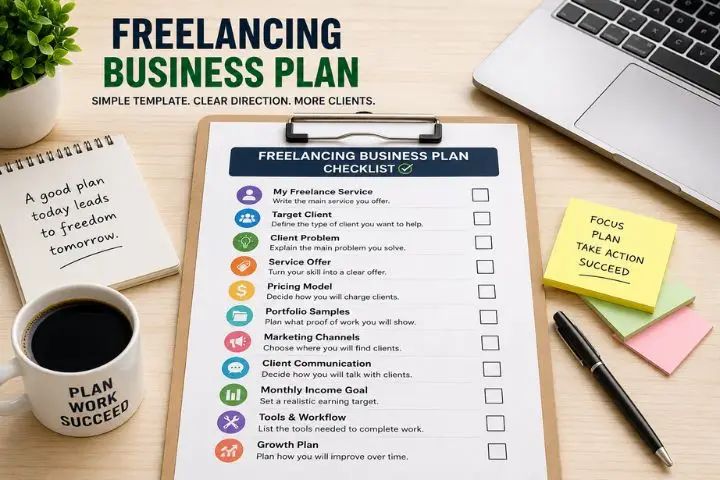
This freelancing business plan template is designed to help beginners turn a simple skill into a clear action plan. It is not meant to be complicated. The goal is to help a new freelancer write down the most important details before they start applying for work, creating offers, or contacting clients.
A beginner can copy this template, fill in each line, and update it as they learn more from real client conversations.
Copy-Paste Freelancing Business Plan Template
- My freelance service is:
Write the main service you want to offer, such as blog writing, logo design, video editing, virtual assistance, SEO, or social media management. - My target client is:
Write the type of client you want to help, such as small business owners, bloggers, coaches, startups, online stores, or local businesses. - The problem I solve is:
Explain the main problem your client has. For example, “They need website content but do not have time to write it.” - My main offer is:
Turn your service into a clear offer. For example, “I will write SEO-friendly blog posts for small business websites.” - My starting price is:
Choose a simple starting price based on your skill level, service type, and market. - My portfolio samples will be:
List 2–3 samples you can create to show your work, even if you do not have clients yet. - I will find clients through:
Mention your main client-finding channels, such as LinkedIn, Fiverr, Upwork, Facebook groups, referrals, or direct outreach. - My weekly outreach goal is:
Write how many people you will contact or how many proposals you will send each week. - My monthly income goal is:
Set a realistic first goal, such as earning your first $100, $300, or $500. - The tools I need are:
List tools that help you complete the work, such as Google Docs, Canva, Grammarly, Trello, Notion, Zoom, or CapCut. - My 90-day goal is:
Write a simple goal, such as getting your first two clients, improving your portfolio, or increasing your price.
These freelancing tips business plan steps are simple enough for beginners who do not want a complicated business document. From my experience, this type of template works best when it is reviewed every month. A freelancer can update pricing, service offers, target clients, and marketing methods as they learn what actually works.
Practical Tips for Creating a Strong Plan
A strong freelance plan does not need to be complex. In fact, beginners often get better results when the plan is simple, focused, and easy to follow. The goal is not to write a perfect document. The goal is to create a clear direction that helps a freelancer take action every week.
Here are some practical tips for creating a strong plan:
- Start with one service:
A freelancer should avoid offering too many services in the beginning. Instead of writing, design, video editing, and social media management together, it is better to start with one main skill and build confidence around it. - Choose one target client group:
A beginner should know who they want to help. For example, a content writer can target small business owners, bloggers, or coaches. A clear client group makes marketing and communication much easier. - Keep pricing simple:
Pricing does not need to be perfect at the start. A beginner can choose a simple fixed price, hourly rate, or basic package. As experience grows, prices can be improved. - Create portfolio samples before heavy outreach:
Clients want to see proof of work. Even if a beginner has no paid clients yet, they can create 2–3 sample projects to show their skill. - Do not depend on one platform only:
Freelance platforms can be useful, but they should not be the only source of clients. A freelancer can also use LinkedIn, Facebook groups, referrals, personal contacts, and direct outreach. - Set a weekly outreach target:
A simple target, such as sending 10 proposals or contacting 10 potential clients per week, helps the freelancer stay consistent. - Track replies and client questions:
Beginners should note what clients ask, what objections they give, and which offers get better responses. This helps improve the plan. - Improve the offer every month:
The first offer may not be perfect. It can be adjusted based on client feedback, pricing response, and portfolio growth.
From my experience, the first version of a plan should be simple because beginners usually learn more after talking to real clients. One of the most useful freelancing tips business plan methods is to keep the first plan short, clear, and easy to update.
Example Plan for a Beginner Freelancer
To make the idea clearer, here is a simple example of a beginner freelancer who wants to start with content writing. This example is not too advanced, but it shows how a skill can be turned into a practical plan.
| Section | Example |
| Service | Blog writing for small business websites |
| Target client | Small business owners, bloggers, and local service providers |
| Problem | They need website content but do not have time to write it |
| Offer | SEO-friendly blog article package |
| Starting price | Fixed price per article or a small monthly content package |
| Portfolio | 3 sample blog posts on business, marketing, or how-to topics |
| Marketing | LinkedIn, Facebook groups, freelance platforms, and direct outreach |
| Weekly action goal | Send 10 proposals or contact 10 potential clients |
| 30-day goal | Get the first 2 paid clients |
This sample freelancing business plan shows how a beginner can connect their skill with a real client need. Instead of saying, “I can write anything,” the freelancer has a clear service, a clear client type, and a clear problem to solve.
From my experience, this kind of simple plan is easier to follow than a broad plan with too many services. A beginner does not need to target every type of client. They only need a clear starting point, a few portfolio samples, and a consistent way to reach potential clients.
Common Mistakes Beginners Should Avoid
A freelancing plan is useful only when it is realistic and easy to follow. Many beginners make the mistake of copying advanced freelancers or creating a plan that looks professional but does not match their current skill level.
Here are some common mistakes beginners should avoid:
- Making the plan too long:
A beginner does not need a 20-page document. A short and clear one-page plan is usually enough in the beginning. - Copying someone else’s plan:
Every freelancer has different skills, time, goals, and client opportunities. Copying another person’s plan may create confusion instead of clarity. - Not choosing a niche:
Beginners often try to serve everyone. It is better to start with one service and one type of client, then expand later. - Not setting a starting price:
Without pricing, it becomes difficult to send offers or respond confidently to clients. The price can be basic at first, but it should be written clearly. - Ignoring portfolio samples:
Clients need proof before they trust a new freelancer. Even 2–3 sample projects can make a beginner look more prepared. - Depending only on Upwork or Fiverr:
Freelance platforms are helpful, but they should not be the only way to find clients. LinkedIn, referrals, Facebook groups, and direct outreach can also work. - Not tracking income and results:
A freelancer should track proposals, replies, clients, income, and lessons learned.
These freelancing tips business plan mistakes are common when beginners try to follow advanced freelancers too early. From my experience, a simple plan works better when it matches the freelancer’s current skill level, available time, and realistic client opportunities.
How to Review and Improve the Plan Monthly
A freelancing plan is not something a beginner writes once and never changes. It should improve with real experience, client replies, completed work, and lessons learned. In the beginning, a freelancer may not know which service, price, or platform will work best. That is why reviewing the plan every month is important.
Updating a freelancing business plan every month helps a freelancer improve instead of repeating the same mistakes. A simple monthly review can show what is working, what is not working, and what needs to be changed.
Here are a few questions beginners can ask during the monthly review:
- Which service got the most interest from clients?
- Which type of client replied the most?
- Which price worked better?
- Which platform or method gave better leads?
- Which portfolio sample helped build trust?
- What client questions came up again and again?
- What should be improved next month?
Beginners should avoid changing everything every week. Too many changes can create more confusion. In my opinion, a monthly review is enough in the beginning because it gives the freelancer time to test their service, pricing, outreach, and portfolio properly. Small monthly improvements can make the plan stronger and more realistic over time.
Conclusion
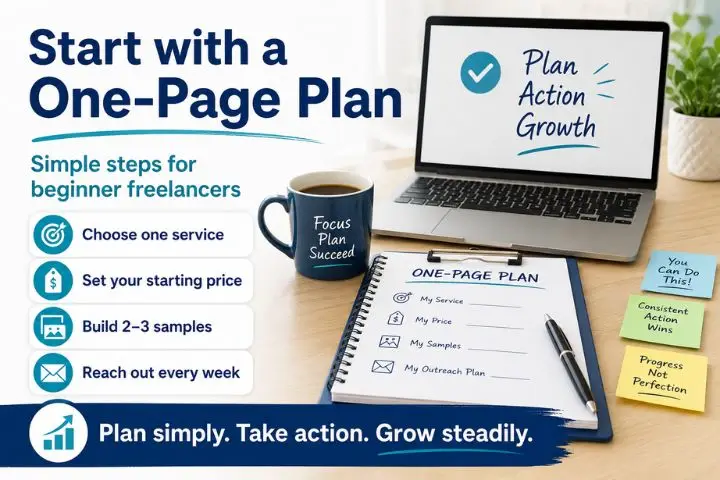
Freelancing becomes easier when a beginner has a clear service, target client, offer, pricing plan, and weekly action path. Without planning, many new freelancers waste time applying randomly, offering too many services, or charging without confidence. A simple plan helps bring focus and makes the starting process more practical.
A simple freelancing business plan can help beginners move from random effort to focused action. It does not need to be perfect, long, or complicated. Even a one-page plan can give enough clarity to choose the right service, build a small portfolio, find potential clients, and track progress.
In practice, clarity matters more than perfection. A beginner can start with a basic plan and improve it as real client experience grows. The important thing is to take action, review results, and keep improving the plan step by step.
FAQs
What is a freelancing business plan?
A freelancing business plan is a simple roadmap that explains what service a freelancer will offer, who they will help, how they will charge, and how they will find clients. It does not need to be a long business document. For beginners, it can be a short plan that gives clear direction before starting freelance work.
Do beginners need a business plan for freelancing?
Yes, beginners should have a simple plan before starting freelancing. It does not have to be complicated. A one-page plan is enough to help a beginner choose one service, understand their target client, set basic pricing, and decide how they will look for work.
How long should a freelance business plan be?
A freelance business plan can be short, especially for beginners. One page is usually enough in the beginning. The goal is not to create a perfect document. The goal is to write a clear and useful plan that can be followed and updated as the freelancer gains experience.
What should be included in a freelance business plan?
A freelance business plan should include the service, target client, client problem, pricing model, portfolio samples, marketing channels, monthly income goal, tools, and workflow. These sections help a freelancer understand what they offer, who they serve, and how they plan to earn money.
Can someone start freelancing without a business plan?
Yes, someone can start freelancing without a plan, but it can lead to confusion, random applications, weak pricing, and unclear goals. These freelancing tips business plan ideas are mainly for beginners who want to start with more focus, better direction, and a simple path toward getting clients.
About the author:
I am Zirwa Khalid, a freelancer and content writer who enjoys creating simple, practical guides for beginners who want to start working online. As a freelancer myself, I understand how confusing it can feel at the beginning when you are choosing a skill, creating a plan, finding clients, and building confidence. Through my writing, I try to share beginner-friendly freelancing tips, online earning ideas, and practical steps that make digital work easier to understand and start.